Water Supply
A suitable water source and storage arrangement provide the supply required by the engineered system design.
Automatic fire sprinkler solutions designed to help control a developing fire and support occupant safety. SAFEX PRO can help assess project requirements and coordinate suitable sprinkler system planning, installation, testing and maintenance.
A fire sprinkler system is a fixed fire-protection arrangement that uses a network of pipes and sprinkler heads supplied by an appropriate water source. When exposed to sufficient heat, an individual sprinkler head may operate and discharge water in its designed coverage area.
System design depends on occupancy, hazard classification, building layout, water supply and applicable codes. The correct design, installation and commissioning should be carried out by qualified professionals in line with approved plans and local requirements.
Discuss Your Requirements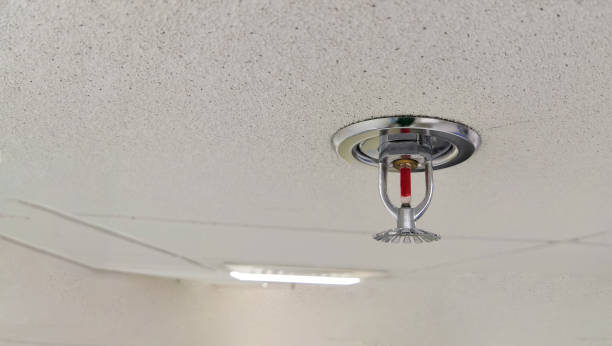
Equipment and configuration vary according to the approved design. All components should be compatible, accessible and properly maintained.
A suitable water source and storage arrangement provide the supply required by the engineered system design.
Where required, pumps and associated controls help deliver the design flow and pressure to the sprinkler network.
Designed pipework distributes water throughout the protected areas and must be supported and protected appropriately.
Heat-responsive sprinkler heads discharge water in their designed pattern when operating conditions are reached.
Control valves and associated devices support system operation, isolation and inspection according to the design.
Where specified, water-flow and supervisory devices can signal system status to the building's fire alarm or monitoring arrangement.
Sprinkler systems may be appropriate for a wide range of occupancies. Coverage and system type should be determined through a qualified risk assessment and the applicable standards.
Offices, retail premises, malls and mixed-use developments.
Factories, workshops, warehouses and storage areas, subject to hazard-specific design.
Residential towers, hotels and other occupancies where sprinkler protection is required or specified.
Schools, healthcare facilities and public buildings according to the applicable fire strategy.
A dependable sprinkler installation begins with reviewing drawings, occupancy and water-supply capacity. Pipe routing, head locations, clearances, valve access and interfaces with alarm systems should follow the approved design.
Inspection and maintenance may include checking valves and gauges, examining visible pipework and sprinkler heads, confirming access, reviewing alarms and carrying out prescribed tests. Work should be completed by qualified personnel and documented as required.
Never obstruct sprinkler heads or hang objects from them. Do not paint, remove, cover or alter sprinkler heads and pipework. Any damage, leakage, closed control valve or other suspected impairment should be reported promptly to the responsible building team and handled by qualified fire-protection personnel. A sprinkler system does not replace evacuation planning, alarms or other required fire-safety measures.
Contact SAFEX PRO to discuss your building, project requirements and fire-protection service needs.